Rajasthan, the land of kings, forts, and deserts, is a kaleidoscope of vibrant colors and rich cultural heritage. Each city in this majestic state tells a unique story through its architecture, traditions, and, most notably, its colors. Let’s embark on a visual journey through the color cities of Rajasthan.
Jaipur – The Pink City
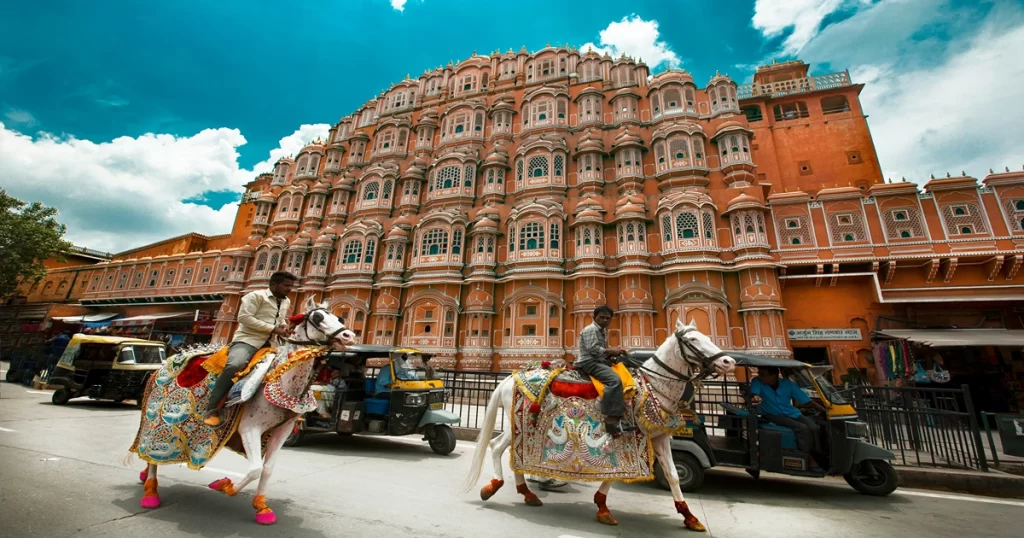
Jaipur, the capital city of Rajasthan, is famously known as the Pink City. The city earned this moniker when it was painted pink to welcome the Prince of Wales in 1876. The color pink symbolizes hospitality, and it adorns the walls and buildings of the old city area. Wandering through the bustling streets of Jaipur, you’ll be greeted by majestic forts, intricate palaces, and bustling bazaars, all tinged with the warm hues of pink.
Jodhpur – The Blue City
As you travel westward, you’ll encounter Jodhpur, fondly referred to as the Blue City. Nestled at the edge of the Thar Desert, Jodhpur’s houses are painted in various shades of blue, believed to ward off heat and mosquitoes. The towering Mehrangarh Fort dominates the city’s skyline, casting a shadow over the labyrinthine streets below. From the azure houses to the indigo streets, every corner of Jodhpur exudes a sense of tranquility amidst the desert landscape.
Udaipur – The White City
Udaipur, often hailed as the Venice of the East, is renowned for its ethereal beauty and romantic ambiance. Unlike its counterparts, Udaipur is known as the White City, owing to the pristine white marble structures that grace its shores and hills. The shimmering Lake Pichola reflects the majestic palaces and temples that line its banks, creating a surreal tableau of white against the azure waters. Udaipur’s charm lies in its timeless elegance and the seamless blend of Rajput and Mughal architectural styles.
Jaisalmer – The Golden City
Jaisalmer rises like a mirage from the golden sands of the Thar Desert, earning it the title of the Golden City. The entire city seems to shimmer in shades of gold as the sunlight dances off the intricately carved sandstone facades. The majestic Jaisalmer Fort stands sentinel over the desert, its honey-colored walls blending seamlessly with the surrounding landscape. From camel safaris across the dunes to exploring ancient havelis adorned with golden filigree, Jaisalmer offers a glimpse into Rajasthan’s rich heritage.
Pushkar – The Red City
Nestled amidst the Aravalli Range, Pushkar is a sacred town revered by pilgrims and travelers alike. Known as the Red City, Pushkar’s streets and buildings are painted in shades of terracotta and crimson, creating a mesmerizing contrast against the surrounding desert landscape. The sacred Pushkar Lake lies at the heart of the town, its tranquil waters reflecting the vibrant colors of the ghats and temples that line its banks. Pushkar’s spiritual aura and vibrant hues make it a must-visit destination for seekers of serenity and cultural immersion.
Wrapping Up
Rajasthan’s color/colour cities are not merely a feast for the eyes but also a reflection of its rich history, culture, and traditions. Each city narrates a distinct tale, weaving together the threads of heritage and hospitality that define this enchanting land. Whether you wander through the pink streets of Jaipur, the blue lanes of Jodhpur, or the golden sands of Jaisalmer, Rajasthan’s vibrant hues will leave an indelible imprint on your soul, beckoning you to return and explore further.
FAQs
1. Why are certain cities in Rajasthan associated with specific colors?
Each city’s color is linked to its architecture, history, or cultural symbolism:
- Jaipur – The Pink City: Painted pink in 1876 to welcome the Prince of Wales.
- Jodhpur – The Blue City: Blue homes to beat heat and denote Brahmin quarters.
- Udaipur – The White City: White marble palaces and serene lakes.
- Jaisalmer – The Golden City: Yellow sandstone glowing in desert sunlight.
- Bikaner – The Red City: Red sandstone forts and heritage buildings.
- Pushkar – The Spiritual Hue: Sacred town glowing golden/orange at dawn and dusk.
2. Which additional cities are color-coded beyond the main four?
Along with Jaipur, Jodhpur, Udaipur, and Jaisalmer, Bikaner (Red City) and Pushkar (Spiritual/Golden Hue) are often included.
3. Is the list of color cities fixed or does it vary?
The list varies by source. Some highlight four (Jaipur, Jodhpur, Udaipur, Jaisalmer), while others add Bikaner and Pushkar.
4. Are there historical or symbolic reasons behind these colors?
Yes. Jaipur’s pink reflects hospitality, Jodhpur’s blue symbolizes caste and climate adaptation, Udaipur’s white radiates purity, Jaisalmer’s golden glow comes from sandstone, and Bikaner’s red stems from its red sandstone forts.
5. What are the must-see attractions in these color cities?
- Jaipur: Hawa Mahal, Amber Fort, City Palace
- Pushkar: Brahma Temple, Pushkar Lake, Ghats
- Jodhpur: Mehrangarh Fort, Jaswant Thada, Blue Old City
- Jaisalmer: Golden Fort, Patwon Ki Haveli, Sam Sand Dunes
- Bikaner: Junagarh Fort, Karni Mata Temple, Camel Breeding Farm
- Udaipur: City Palace, Lake Pichola, Jag Mandir
6. When did the practice of color-painting originate?
- Jaipur was painted pink in 1876 for the Prince of Wales’ visit.
- Jodhpur’s blue tradition developed over centuries.
- Others evolved through local traditions and natural resources.
7. What is the significance of “Rangilo Rajasthan”?
“Rangilo” means “colorful,” symbolizing Rajasthan’s vibrant culture, attire, festivals, and uniquely hued cities.
8. Which city offers the best photo opportunities?
- Jaipur: Heritage pink palaces and bazaars.
- Pushkar: Spiritual lake and ghats at sunrise.
- Jodhpur: Blue houses from Mehrangarh Fort.
- Jaisalmer: Golden desert sunsets and fort.
- Bikaner: Red sandstone forts and lanes.
- Udaipur: White marble reflections on lakes.
9. What is a standard itinerary to visit all these Color Cities?
A 10–12 day trip works well:
- Day 1–2: Jaipur (Pink City) → Explore Hawa Mahal, Amber Fort, markets
- Day 3: Pushkar (Spiritual Hue) → Brahma Temple, lake, ghats
- Day 4–5: Jodhpur (Blue City) → Mehrangarh Fort, Jaswant Thada, clock tower
- Day 6–7: Jaisalmer (Golden City) → Golden Fort, Patwon Ki Haveli, desert safari
- Day 8: Bikaner (Red City) → Junagarh Fort, Karni Mata Temple
- Day 9–10: Udaipur (White City) → City Palace, Lake Pichola, Jag Mandir
- Optional Day 11–12: Ranakpur/Kumbhalgarh en route to Udaipur
Best route: Jaipur → Pushkar → Jodhpur → Jaisalmer → Bikaner → Udaipur → back to Jaipur
10. What are the major air and rail connectivity hubs for this itinerary?
- Jaipur: Jaipur International Airport (JAI), Jaipur Junction
- Pushkar: Ajmer Junction (11 km), Kishangarh Airport (40 km)
- Jodhpur: Jodhpur Airport (JDH), Jodhpur Junction
- Jaisalmer: Jaisalmer Airport (JSA – seasonal flights), Jaisalmer Railway Station
- Bikaner: Nal Airport (BKB – limited), Bikaner Junction
- Udaipur: Maharana Pratap Airport (UDR), Udaipur City Station
Travel Tip: Use flights for longer stretches (Jaipur–Jaisalmer/Udaipur) and trains or cabs for short hops (Jaipur–Pushkar, Jodhpur–Jaisalmer).
Happy Voyaging!